Articles

  • |

    Changing Your Tuning to Perfect Fifths

    When you change the tuning of any stringed instrument, you inevitably change the instrument’s character. Of course, tuning isn’t the only element defining an instrument’s character but an instrument’s tuning has significant impact on how the instrument sounds and how it functions. There are all sorts of tuning variations used by stringed instruments. For guitar there is NST, Drop D, Drop C, DADGAD, and many more. Banjos have many traditional tunings such as Open G tuning, tuning in 5ths, Chicago tuning, C tuning, Double C tuning, etc. Classical string players may run into pieces marked “scordatura” where the composer indicates a different tuning to be used for effect. When you change your instrument’s tuning, you may find yourself picking up something totally new while leaving…
  • |

    Scarpology Testimonials from Seasoned Pros

    Originally written Sept 1, 2013 after the publication of Scarpology. Two Yaaaays and One Maaaay-be In case you haven’t already heard, I wrote a book entitled Scarpology: a Mapping of the Fretboard and an Introductory Method for Improvisation on Mandolin or Other Instruments Tuned in Perfect Fifths. This is what has taken most of my writing time for the past year or longer. It was a huge amount of work and before I went public with it, I wanted to get some feedback from trusted sources and I am happy to report on some very helpful feedback. Of the four professionals I sent copies to, three reported back, one did not. Of the three that reported back, two were highly complimentary and one had some…

  • |

    The Idiomatic Rut

    Originally written August 31, 2013. Updated November 15, 2024. One man’s groove is another man’s rut…well, sort of. The term rut is hard to define and, even when defined, the term is hard to distinguish from other lesser or greater terms of the same nature. What is a groove and what is a rut? Or in worst-case scenarios, what is a chasm, what is an abyss? Maybe our situation is not that dramatic but it could become that especially if we find ourselves at a place that we can’t seem to break free from. Defining a Groove and Defining a Rut In many areas including music, a groove is something that carries us, that we ride with and gain momentum from. With it, we can move…

  • |

    Scarpology Book on Improvisation: a look into the book

    Here are some pieces extracted from the preface of Scarpology: A Mapping of the Fretboard and an Introductory Method for Improvisation on Mandolin and Other Instruments Tuned in Perfect Fifths Scarpology as a book and comes in both digital and print format. The print version is highly recommended! But there also is a digital version at a greatly reduced price. Who is this book for? This book is written to be read by novices or by well-versed musicians who want to increase their playable range to include the entire neck of their instrument* and to be able to play and improvise in any key. This book also is for music instructors who are interested in this method as a teaching tool for their students.*The target…

  • |

    Mandolin: A Prospector’s Dream

    The mandolin can be soft and delicate or robust and driving. It can be sweet or savory. The mandolin offers color, melodic agility, percussive rhythm to any musical setting. It is a traditional part of many musical genres: classical, Neapolitan, jazz, old time, Bluegrass, Country Western and is found in many other genres as well.

    Learning its potential is the purpose of this blog, to share in the community of players and listeners, of composers and arrangers, band leaders and their audiences.

  • | | |

    About Chords for the Mandolin

    Mandolin has a pitch range that starts from G below middle C and  spans 3 octaves or more. It’s short string length means a person’s hands can spread over more frets than larger instruments. Moving up the neck, the player will notice a greater ease of reach counteracted by cramped spaces, crowding fingers into miniature shapes to play chords that are easier down low on the neck. This necessitates some change in strategy when playing high up the neck, and generally means that the higher up the neck one chords, the wider the interval spacing becomes. (read more about “Density/Expansivity“.) Although this is true on any stringed instrument, on the mandolin this can be an issue that demands more attention from each individual player depending…

  • |

    Fitting Into the Big Picture

    The mandolin brings a wide range of musical options to the table offering significant rewards for the mandolinist, for the band and for the listener. Its output tends to be focused and punctuating, adding color and character. Of the three basic elements of music, melody, rhythm and harmony, the mandolin tends to lean heavily on melody and on rhythm. Such a spicy concoction offers a lot to the ensemble, yet requires consideration from the band members and the mandolinist as well.

  • | |

    Gravity and Levity in Music

    The purpose of this article is to offer food for thought more than to define an element or draw a conclusion and your comments are welcome. This is a discourse in music theory although scientifically very soft. The point is simply to better understand the complex nature of what we hear in music. What is Gravity and Levity in music? Gravity/Levity, or the Gravity/Levity factor (G-L factor), is similar in concept to weight. This article will deal with the concept of Gravity/Levity in terms of harmonic content but other aspects of music can have significant bearing on the G-L factor: timbre, tessiatura, a variety of techniques of orchestration, to name a few. Harmonically speaking, the more gravity a musical element has, the more of a…

  • |

    Jazz Chord Theory

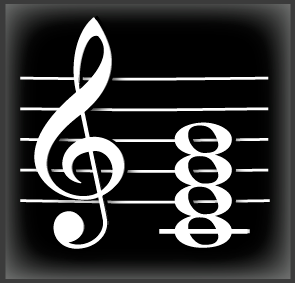
    With a focus on the tetrad as a basic building block for jazz and popular music today, we hope to offer some basic information on chord theory that will enhance and work in conjunction with the rest of this website. An understanding of theory serves to explain in words what we do in music. This gives us a medium on which to communicate the language of music with our language of the spoken word.