About Chords for the Mandolin
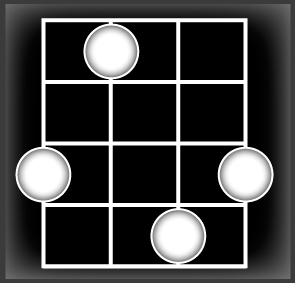
Mandolin has a pitch range that starts from G below middle C and spans 3 octaves or more. It’s short string length means a person’s hands can spread over more frets than larger instruments. Moving up the neck, the player will notice a greater ease of reach counteracted by cramped spaces, crowding fingers into miniature shapes to play chords that are easier down low on the neck. This necessitates some change in strategy when playing high up the neck, and generally means that the higher up the neck one chords, the wider the interval spacing becomes. (read more about “Density/Expansivity“.) Although this is true on any stringed instrument, on the mandolin this can be an issue that demands more attention from each individual player depending on the size of their hands and the width of their fingers.
Here’s a cool book of moveable chords for mandolin (PDF format). It’s free but please read end user license agreement.
Conversely, the larger instruments of the mandolin family aren’t as readily able to achieve the farther spreads. Reach for players of the larger members of this family is exacerbated by the wider tuning intervals compared to similarly sized instruments like guitar or plectrum and 5-string banjos. Musicians who choose to play octave mandolin, tenor banjo or guitar, bouzouki, or mandocello will often choose to make concessions due to the harder reaches that some chord shapes require. This may mean playing denser chord shapes or making more frequent use of two or three note chords. Alternate tunings may also be of some help but this website and its materials only embrace the traditional mandolin family tuning in pure fifths.
In a nutshell, let it be said that the issue of reach, especially due to tunings in the wider interval of the fifth, is a task each individual must embrace with consideration of his or her own physical make up, making use of the advantages and conquering the challenges.
The general pitch range of the mandolin makes it somewhat of an alto, but moreso, a soprano instrument. This means that when playing in a group, there is little need to consider which chordmember is in the bass as that is nearly always managed by another player. While on guitar, piano or bass, one must consider carefully when placing thirds, fifths or sevenths of a chord in the bass, the mandolin has more latitude and can more freely add these notes on the bottom of chords without penalty. This is also true of certain intervals such as the tritone, which with most instruments is avoided at the bottom of chord structures but with mandolin, this is rarely a problem. Mandolinists would be more advised to consider the impact of the scale degrees chosen for the top notes. These will seldom cause severe conflicts but have special impact as they are more pronounced due to their high placement in the overall tonal sound.
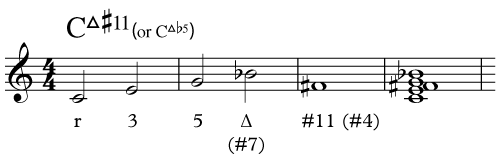
One should note after saying this, that other elements of chord voicings stand out on mandolin. For instance, chords that use a major 7th should almost always place the root of the chord below the seventh. Similarly, 6ths, 9ths (especially flatted 9ths) work more effectively when placed higher in the chord voicing.
Players will encounter these concepts when playing and experimenting. The materials found on this website already take worthy consideration of all of this. Hopefully, the player will avoid these faux pas when using the materials found on this site.