Mando Specifics

  • |

    The Idiomatic Rut

    Originally written August 31, 2013. Updated November 15, 2024. One man’s groove is another man’s rut…well, sort of. The term rut is hard to define and, even when defined, the term is hard to distinguish from other lesser or greater terms of the same nature. What is a groove and what is a rut? Or in worst-case scenarios, what is a chasm, what is an abyss? Maybe our situation is not that dramatic but it could become that especially if we find ourselves at a place that we can’t seem to break free from. Defining a Groove and Defining a Rut In many areas including music, a groove is something that carries us, that we ride with and gain momentum from. With it, we can move…
  • |

    Mandolin: A Prospector’s Dream

    The mandolin can be soft and delicate or robust and driving. It can be sweet or savory. The mandolin offers color, melodic agility, percussive rhythm to any musical setting. It is a traditional part of many musical genres: classical, Neapolitan, jazz, old time, Bluegrass, Country Western and is found in many other genres as well.

    Learning its potential is the purpose of this blog, to share in the community of players and listeners, of composers and arrangers, band leaders and their audiences.

  • | | |

    About Chords for the Mandolin

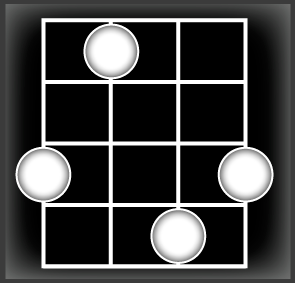
    Mandolin has a pitch range that starts from G below middle C and  spans 3 octaves or more. It’s short string length means a person’s hands can spread over more frets than larger instruments. Moving up the neck, the player will notice a greater ease of reach counteracted by cramped spaces, crowding fingers into miniature shapes to play chords that are easier down low on the neck. This necessitates some change in strategy when playing high up the neck, and generally means that the higher up the neck one chords, the wider the interval spacing becomes. (read more about “Density/Expansivity“.) Although this is true on any stringed instrument, on the mandolin this can be an issue that demands more attention from each individual player depending…

  • |

    Fitting Into the Big Picture

    The mandolin brings a wide range of musical options to the table offering significant rewards for the mandolinist, for the band and for the listener. Its output tends to be focused and punctuating, adding color and character. Of the three basic elements of music, melody, rhythm and harmony, the mandolin tends to lean heavily on melody and on rhythm. Such a spicy concoction offers a lot to the ensemble, yet requires consideration from the band members and the mandolinist as well.

  • |

    Where This May Lead

    The internet offers us such a wonderful tool for communications, offering many media sources to experience and to learn from. We are lucky today to have such convenient access to so much information available at our wish and not the wish of someone else. Our wish is to share with you and hope you will share back. We hope you enjoy reading and enjoy learning from the content you find on this website. We also hope you will register and offer your comments. Together we make up a community that is already well established on the web. This site is one facet of that community. What we’re doing here is highly promotional. We want to promote music, jazz and particularly the mandolin and its family…

  • |

    Density/Expansivity in Music

    Sound can be dense or expansive, relatively speaking. In fact, any element of sound or of music can have its own density/expansivity attributes that contribute to the overall density/expansivity of a sound, of a piece or music, of an ensemble, or any element of music or sound. This will be referred to as the Density/Expansivity Factor or D-E Factor. Every musical instrument has it’s own D-E make-up.  Mandolin is relatively expansive for a variety of reasons. But before we go into these characteristics particular to the mandolin, lets talk about the D-E Factor or D-E in general terms. Density could be summed up as “stuff drawn together into close proximity”. A collection of “stuff” could be strewn across it’s measuring scale and therefore expanded, or…